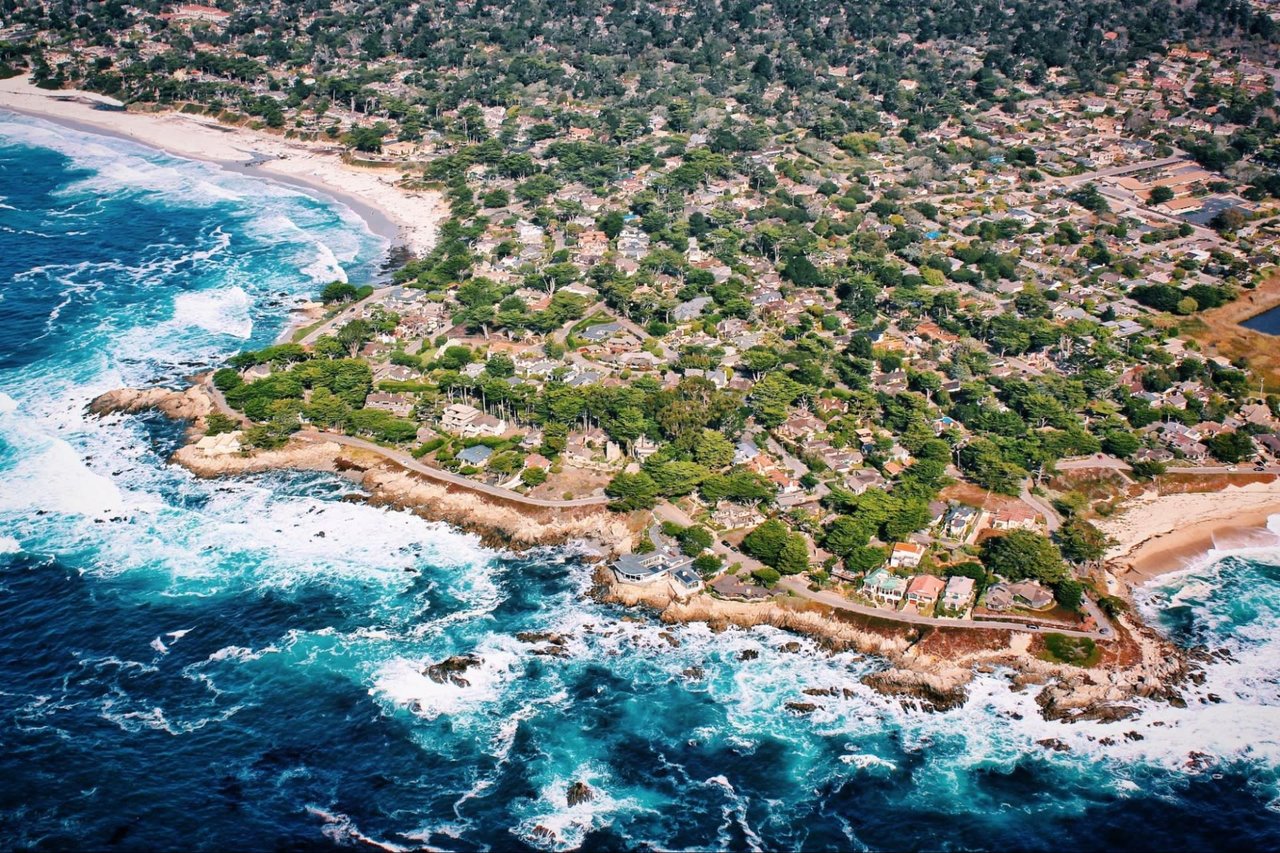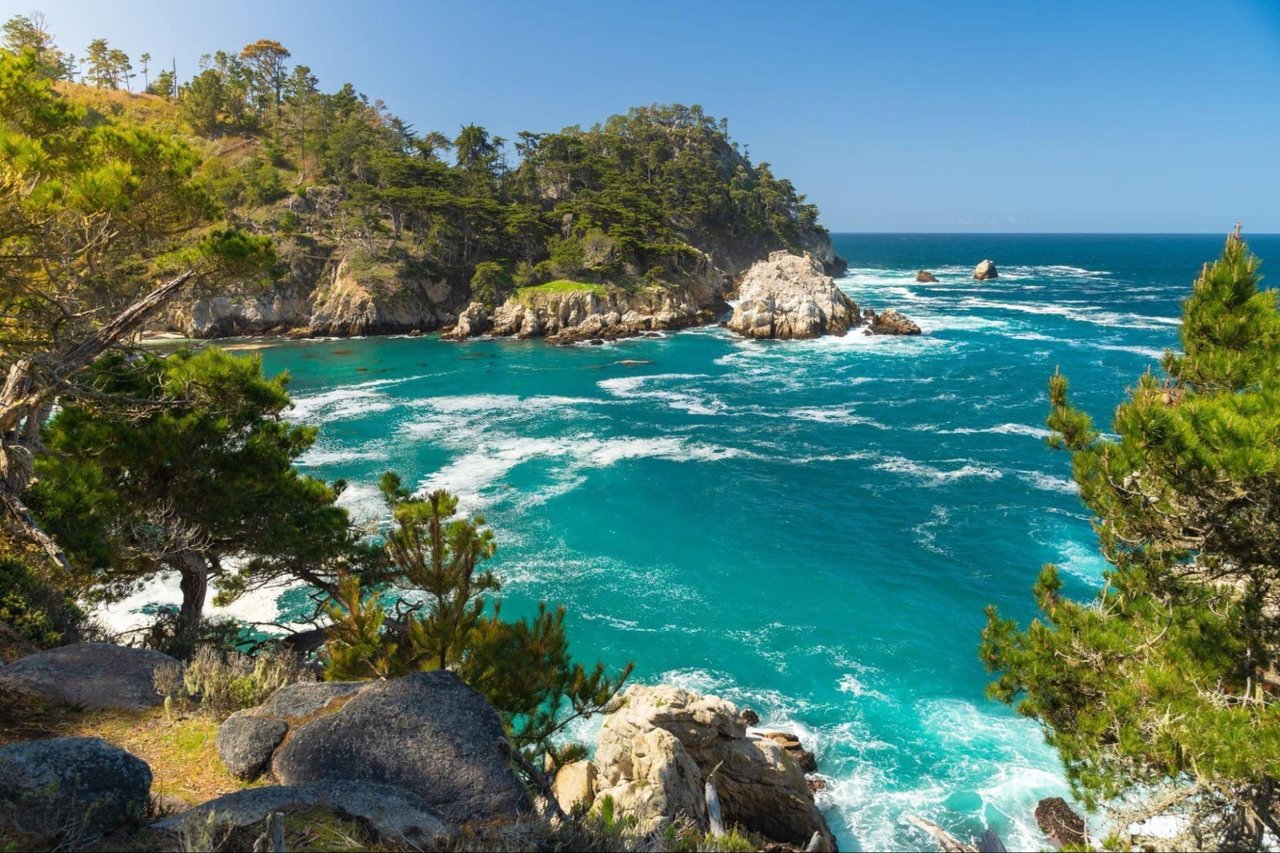
In 2018, Carmel Highlands resident Ernest Chung began hosting meetings at his dining room table about the traffic outside Point Lobos State Natural Reserve. According to the Carmel Pine Cone, those meetings became ParkIT!, and eight years later the plan has its first major approval.
On Oct. 14, the Monterey County Planning Commission voted unanimously to approve a permit for a day-use reservation system, an entrance fee and a shuttle connecting the reserve to a new parking lot at Marathon Flats, near Highway 1 and Rio Road. Monterey County NOW reported the vote and the basic outline.
The reservation requirement would also apply to people who arrive on foot or by bicycle, including neighbors who live along the stretch of Highway 1 that passes the reserve entrance.
Why walkers and cyclists are included
It would be easy to assume a parking-reservation system concerns only cars. The county's staff report on the project says otherwise. It describes a two-step system that would require "all individuals visiting the park to have a timed reservation" made online or by phone, and would require "all visitors to the Reserve" to pay an entrance fee, apart from the free walk-in and bike-in slots described below.
The report also explains why. In its list of the dangerous conditions the reserve's popularity has created, it includes this:
"...the unfettered free access that walk-in and bicycle-in visitors have to the Reserve has encouraged further shoulder parking along Highway 1 rather than parking within the Reserve."
The reasoning goes like this. When the reserve lot is full, a driver can leave the car on the highway shoulder and walk in for free. As long as walking in costs nothing and needs no booking, the shoulder works as overflow parking. Requiring a timed reservation from pedestrians and cyclists closes that route. The neighbor who has always walked to Whalers Cove from home ends up under the same rule because there's no practical way to tell that walker apart from the visitor who parked half a mile up the road.
The ParkIT! FAQ answers the question in one line: "Yes, all visitors will be required to have a reservation." State Parks gave the same answer at the Aug. 3 meeting of the Carmel Unincorporated/Highlands Land Use Advisory Committee. When a member of the public asked whether walk-in visitors would need a reservation, State Parks said yes, a reservation would be required.
The pressure behind all this is volume. Planning Commissioner Martha Diehl, whose district includes Point Lobos, told the commission that "this reserve has gone from 100,000 visitors per year to over 1 million today," according to the Carmel Pine Cone.
How a morning walk would work under the plan
Every figure below is proposed and could change before launch. The ParkIT! FAQ says the reservation and shuttle systems "are in development and may change."
The staff report describes about 2,055 timed slots a day, split into three ways in:
| How you arrive | Proposed daily slots | Parking behind it |
|---|---|---|
| Park inside the reserve | 1,215 | The reserve's existing 150 spaces |
| Park at Marathon Flats, ride the shuttle | 540 | A new 100-space lot |
| Walk in or bike in | 300 | None |
The reserve's lot holds 150 cars and the Marathon Flats lot would hold 100, so the daily slot counts assume many visitors per space over the course of a day.
Reservations would be released in three batches:
- 50 percent three to four months ahead
- 25 percent 48 to 72 hours ahead
- 25 percent on the day of the visit
The same-day batch is the one meant for neighbors. The FAQ's use cases include "I live close to the Reserve and walk there every morning," and the answer is that "reservation blocks will be released each morning for spontaneous visitation." Cyclists can book months ahead or on the day. A visitor who shows up without a reservation can book one on the spot if a slot is open, or take the next available time.
Cost is the other question. Point Lobos currently charges $10 to enter by car, and the shuttle plan hasn't settled the future fee. For walkers and cyclists, the county attached Condition No. 16. It makes up to 25 percent of the 300 daily walk/bike slots available at no charge, and it states that this percentage "is not the ceiling for free access," with State Parks committing to seek more funding. All California State Parks passes, along with the California State Library Parks Pass, would be honored.
Fees for people who walk in were a point of debate at the hearing. The Carmel Pine Cone reported that California Coastal Commission planner Nolan Clark raised concerns about possible fees for cyclists and pedestrians, and that officials still have to decide whether they will be admitted free.
Some regular users already have a set path. Dive permits would count as a reservation and come with parking inside the reserve, and so would docent shifts.
The shoulder parking stays, at least in this phase
The plan does not clear the Highway 1 shoulder. The FAQ says the system would favor parking at the reserve and at Marathon Flats, and that on peak days "parking on the highway will be reduced and managed." Its use cases still list shoulder parking on peak days as an option, with the number of spaces "tbd."
At the August advisory committee meeting, State Parks went further. According to the committee minutes, the agency said no parking would be removed along the highway, that fencing is planned along the highway, and that no signage was planned along the highway.
One shoulder change has already happened. ParkIT! lists the removal of dangerous parking on the east side of Highway 1 among its completed milestones.
What the Highlands committee asked for
The Carmel Unincorporated/Highlands Land Use Advisory Committee voted 4-0 to support the project, with three requested changes. The staff report records each one and how it was handled:
- Update the capacity plan and set a maximum visitation number. Not part of this project. The 2021 Reserve General Plan treats it as a future phase.
- Build a permanent on-site or near-site parking lot sized to that capacity. Also deferred to a future phase.
- Post signs along Highway 1 saying reservations are required, showing where highway parking is and isn't allowed, and stating whether vehicles can be cited or towed. This one moved forward partway. Condition No. 16 requires State Parks to coordinate a signage program with Caltrans and the Coastal Commission.
The same condition requires a comprehensive monitoring and effectiveness report covering how future phases are carried out, whether resources are being protected, and whether visitation can be sustained or increased.
The plan's supporters at the hearing came from the corridor itself. Monterey County NOW reported that residents, Caltrans, the Big Sur Land Trust, emergency responders and the president of the Malpaso Creek Property Association spoke in favor, citing long-standing safety concerns. George Nunez, West Division chief with Cal Fire's San Benito-Monterey Unit, described the traffic as "every day," not just a weekend problem. Commissioner Diehl framed the vote as a chance "to try something rather than speculate how something might work."
Between this vote and the first reservation
For now, entry stays as it is. Cars pay $10, the reserve lot holds 150 vehicles, and the Point Lobos Foundation's visitor page asks drivers parking outside to use designated pullouts, park parallel rather than diagonal, and keep clear of driveways in nearby neighborhoods.
Several steps come before the first shuttle runs. State Parks has to bring a final access management plan back to the planning commission, with the reservation schedule and final numbers. The Pine Cone reported that State Parks also has to set reservation and shuttle fees, choose a shuttle operator and finish the Marathon Flats improvements. The lot would be built on a 1.6-acre former Caltrans parcel between the Carmel Crossroads Shopping Center and Highway 1, part of the new Ixshenta State Park. It would be reached through the Crossroads under a required access agreement, and it would include a ticket machine, temporary restrooms and a five-bike rack.
ParkIT! estimates launch about 12 to 18 months after the Coastal Development Permit is approved, with public messaging about reservations starting six months beforehand. The first sign for Highlands neighbors will be that messaging, well before any change at the gate.
At Carmel Coast Realty, we manage homes near Point Lobos for owners who are often away, and we'll be watching how the final access plan handles day-of slots and shoulder parking along this part of Highway 1. If you'd like to talk through what it could mean for your property or your guests, schedule a local consultation.